Human, AI Agent, or Both?
Two years ago they cut those roles for AI. Now they’re quietly rehiring them. Here’s the decision they skipped.

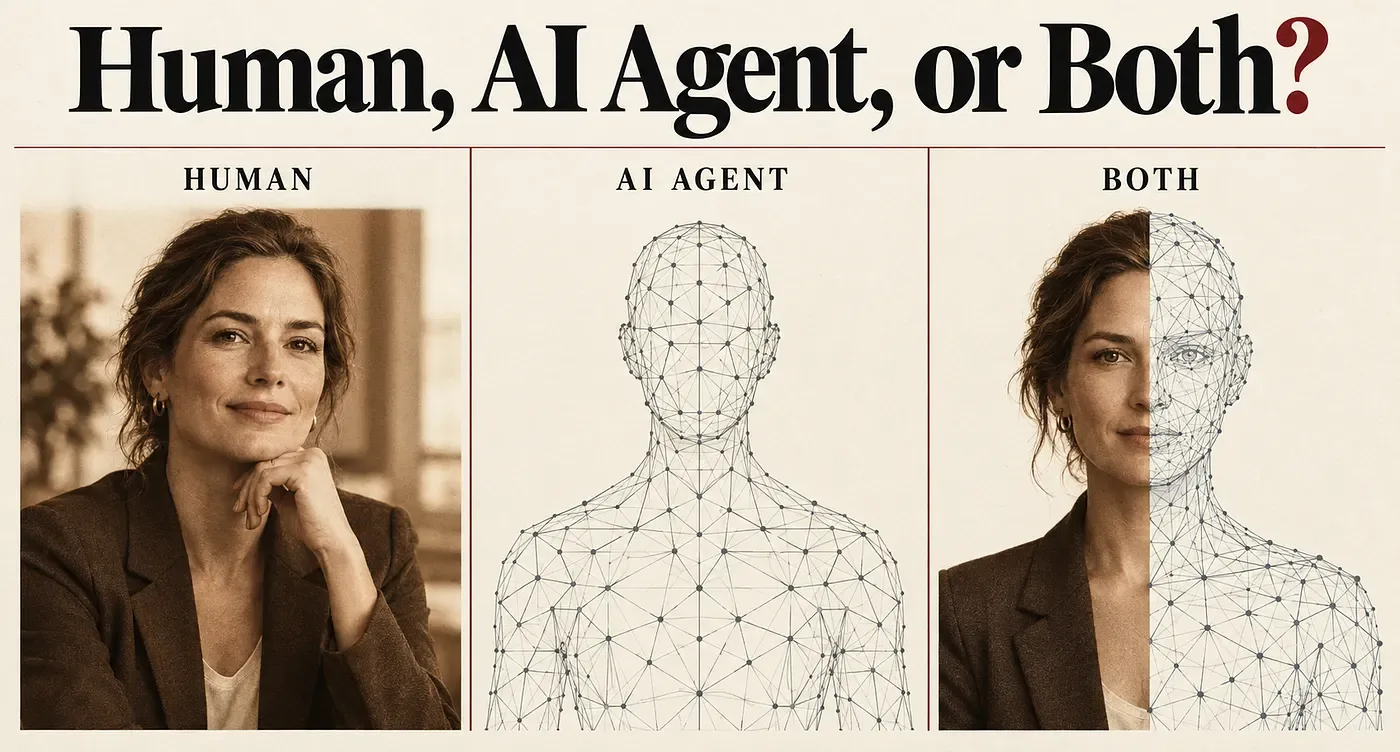
Right now there is no reliable way for a company to answer a question it faces every month: for this specific work, do we need a person, an AI agent, or both?
No team owns it. No budget line covers it. No tool is built to make the call. So it gets made by default, usually by whoever is trimming costs that quarter, over and over, at scale.
Two years ago, everyone cut deep. AI’s got this. Now the same companies are quietly reopening the same roles, no press release attached. That reversal isn’t a strategy. It’s a company finding out. And it’s an expensive way to find out, because you already paid the severance, and now you’re paying me to fix it.
I know, because I get the second phone call. A company lets a function go, confident a leaner team or an agent will absorb it. Eight or nine months later my phone rings, and now they need that exact role back, faster and quieter than the layoff, before anyone clocks the gap. They paid to remove it. They’re paying me to rebuild it. Nobody ever ran the math on whether it should have been cut at all.
Why nobody owns the decision
The labor supply split in two, and the org chart never caught up. “We need this done” used to mean “we need a person.” Now it might mean a person, an agent, or a person supervising one. But those options live in different worlds. Agents sit in the software budget. Headcount sits in people ops. Nobody sets them side by side, because nobody’s job is to.
So the same three mistakes repeat, and each one costs six figures. Cutting people, then rehiring the same roles once the agent falls short. Hiring humans for work an agent already does, because whoever wrote the job description didn’t know what shipped last quarter. Buying agents that can’t do the job, because the demo looked good and nobody tested it against the real work.
All three come from skipping one question.
It looks like an intelligence problem. It’s a judgment problem.
Matching tasks to tools feels like something you can look up. A spec, a search, a tidy table of keep-this, automate-that. It isn’t.
Doing it well takes a live read on three moving things. What agents can actually do this month, not the impression you formed last year, which is already stale. What the role really requires, as opposed to what the job description claims, which is usually a fossil. And who is quietly excellent at the human parts that remain, the people who never surface in a search because the best ones leave almost no trail.
Sourcing and matching are commodities now. Every tool does them. The judgment of human, agent, or both is the part that doesn’t commoditize. And here’s the irony this newsletter keeps landing on: deciding what AI should do is itself the kind of judgment AI can’t do for you.
How to tell whether a role should be a person, an agent, or both
Before you cut or post anything, run the role through this. It’s the rough test I use:
- What can agents actually do this quarter? Not last year’s answer. Re-check it every few months, because the line keeps moving.
- Does anyone have to be accountable in a way a machine can’t be? Legal sign-off, a license, a name on the line. That’s a person, full stop.
- Find the “both” seam. Most roles aren’t all-or-nothing. Let the agent take the 80% that’s repeatable and give a person the 20% that’s judgment, taste, and trust. Build the role around that seam instead of forcing an either-or.
- If it stays human, who’s actually good at it? The people worth hiring for the parts that remain are rarely the ones you find by searching.
Most teams have never run a single role through anything like this. That’s the whole waste, and the whole opportunity.
What I’m building
I’ve made this call more than 300 times by hand, over eight years running a recruiting firm that’s twice landed on Forbes’ lists of America’s best. So I’m encoding it.
HeadhuntEZ, Inc. (headhuntez.com) is an always-on workforce brain that answers the question above for any role: human, AI agent, or both, before you cut anyone. It learns your company, watches what agents can now do, finds the gaps, makes the call, and when the answer is a person, it surfaces the ones search can’t find and books the meeting.
The part I care about most: you pay for the judgment either way, a flat retainer, not a fee that only lands if you hire. A model that earns only on placements can never tell you not to hire. This one can, even when the honest answer is “skip it, an agent has this.”
The skill that’s actually scarce now
For two years the reflex was to ask what AI can do. The sharper question is the quiet one: what still needs a human, and how would you even know?
That judgment is the irresistible skillset. It’s what AI can’t replace, because it’s what decides where AI belongs in the first place. The companies that build it, or borrow it, stop paying to find out the hard way, one severance check and one rehire at a time.